Black Urad Dal vs White Urad Dal - Nutritional Value and Clinical Insights for Better Health
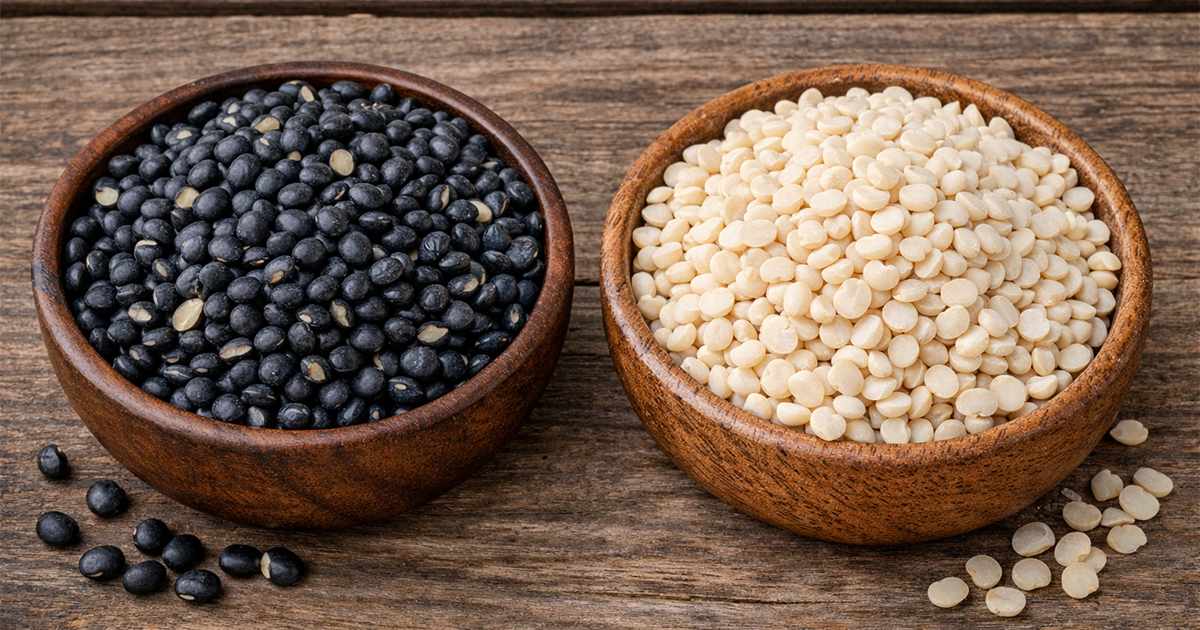
Understanding the nutritional differences between black urad dal (whole urad with skin) and white urad dal (skinned and polished version) is important for individuals focused on preventive health, metabolic balance, and balanced nutrition. Though both originate from the same legume, processing significantly affects fiber, mineral content, and glycemic response. This guide provides a detailed evidence-based comparison to help you make informed dietary decisions.
Nutritional Differences
Black urad dal retains its outer black skin, which is rich in dietary fiber, antioxidants, and micronutrients. White urad dal undergoes polishing, which removes much of the fiber content.
Both provide approximately 24g protein per 100g and are rich in complex carbohydrates. However, black urad dal contains slightly higher levels of iron, magnesium, potassium, and fiber.
Nutritional Profile (Per 100g) - Black Urad Dal- Calories: ~340 kcal
- Protein: ~24g
- Carbohydrates: ~59g
- Fiber: ~18g
- Iron: Higher
- Magnesium: Higher
- Calories: ~347 kcal
- Protein: ~24g
- Carbohydrates: ~60g
- Fiber: Lower than black urad
- Iron: Moderate
Protein and Muscle Health
Both varieties are excellent plant-based protein sources that support muscle repair, enzyme production, and immune function. For vegetarians and athletes, urad dal serves as a valuable protein option. Nutritionally, protein levels are similar in both forms.
Fiber and Digestive Benefits
Black urad dal provides significantly higher fiber due to its intact outer layer. Fiber improves bowel movement, gut microbiome balance, and cholesterol regulation. White urad dal is easier to digest but contains reduced fiber content.
Iron and Anemia Prevention
Iron plays a crucial role in hemoglobin formation and oxygen transport. Black urad dal contains more iron compared to the polished white version, making it beneficial for individuals at risk of anemia.
Calcium and Bone Health
Urad dal is traditionally recommended for bone strengthening. Black urad dal contains slightly higher calcium and magnesium levels, supporting bone density and joint health.
Impact on Blood Glucose Levels
Due to higher fiber content, black urad dal has a relatively lower glycemic impact compared to white urad dal. Fiber slows glucose absorption and supports better blood sugar control.
For individuals monitoring glucose levels, routine screening through:
is recommended for preventive monitoring.
Weight Management and Metabolism
High protein and fiber promote satiety and reduce overeating. Black urad dal may support weight management due to prolonged fullness. White urad dal, being lighter, is often preferred in fermented foods such as dosa and idli.
Pregnancy and Women’s Health Benefits
Urad dal provides iron, folate, protein, and calcium, essential during pregnancy. Black urad dal offers slightly higher mineral density, supporting maternal and fetal health. However, moderation is advised to prevent digestive discomfort.
Culinary Uses and Taste Differences
White urad dal is widely used in dosa, idli, vada, and papad due to its smooth texture when ground. Black urad dal is commonly used in dal makhani and traditional gravies. Flavor-wise, black urad dal is richer and earthier, while white urad dal is milder.
Conclusion
Both black and white urad dal offer significant health benefits. However, black urad dal stands out nutritionally due to higher fiber and mineral retention. White urad dal remains popular for culinary versatility and easier digestion. The optimal choice depends on health goals, digestive tolerance, and dietary preference.
FAQs
Which is healthier - black or white urad dal?
Black urad dal is generally more nutrient-dense due to higher fiber and mineral content.
Is black urad dal good for anemia?
Yes, it contains higher iron levels which support hemoglobin production.
Can diabetics eat urad dal?
Yes, especially black urad dal in moderate portions due to its fiber content.
Web References
- Indian Food Composition Tables (IFCT), National Institute of Nutrition (ICMR-NIN), Hyderabad. Available at: https://www.nin.res.in/ifct.html
- USDA FoodData Central - Nutrient Profile of Urad Dal (Black Gram). Available at: https://fdc.nal.usda.gov/
- National Institute of Nutrition (India) - Dietary Guidelines for Indians. Available at: https://www.nin.res.in/DietaryGuidelinesforNINwebsite.pdf
- Healthline - Lentils Nutrition Facts and Health Benefits. Available at: https://www.healthline.com/nutrition/lentils
- FAO (Food and Agriculture Organization of the United Nations) - Pulses and Human Health. Available at: https://www.fao.org/pulses-2016/en/
- American Diabetes Association - Glycemic Index and Blood Sugar Management. Available at: https://diabetes.org/